
Introduction: Why Healthcare Outsourcing Matters More Than Ever
The healthcare industry is evolving rapidly, but with growth comes increasing complexity. Hospitals, clinics, and healthcare providers are under constant pressure to deliver quality care while managing rising costs and administrative demands. From handling patient records to managing billing cycles, these non-clinical tasks often consume a significant portion of time and resources.
In addition, challenges such as billing errors, delayed claims, staffing shortages, and growing patient data volumes can directly impact operational efficiency and patient satisfaction. Managing everything in-house can slow down processes and reduce overall productivity.
Healthcare outsourcing offers a practical solution by allowing organizations to delegate time-consuming tasks to experts. This helps streamline operations and improve overall performance.
Key challenges healthcare providers face:
- Rising operational and staffing costs
- Increasing administrative workload
- Frequent billing and coding errors
- Delays in claims processing
- Managing large volumes of patient data
What is Healthcare BPO?
Definition and core functions
Healthcare BPO (Business Process Outsourcing) refers to outsourcing non-clinical and administrative functions to specialized service providers. These healthcare BPO services help organizations improve efficiency, accuracy, and cost management.
Instead of managing everything internally, healthcare providers can rely on experts to handle repetitive and complex processes.
Core functions of BPO services for healthcare include:
- Medical billing and coding
- Insurance verification and claims processing
- Patient support and appointment scheduling
- Data entry and electronic health records (EHR) management
While clinical outsourcing focuses on patient treatment, healthcare BPO primarily supports backend operations that keep the system running smoothly.
Why healthcare providers are investing in BPO
The shift toward digital healthcare has increased dependence on advanced systems such as EHRs, analytics tools, and patient management platforms. Managing these technologies requires skilled professionals and ongoing investment.
Outsourcing helps healthcare providers reduce operational burden while improving service delivery and compliance. It also enables organizations to remain flexible and scalable in a competitive environment.
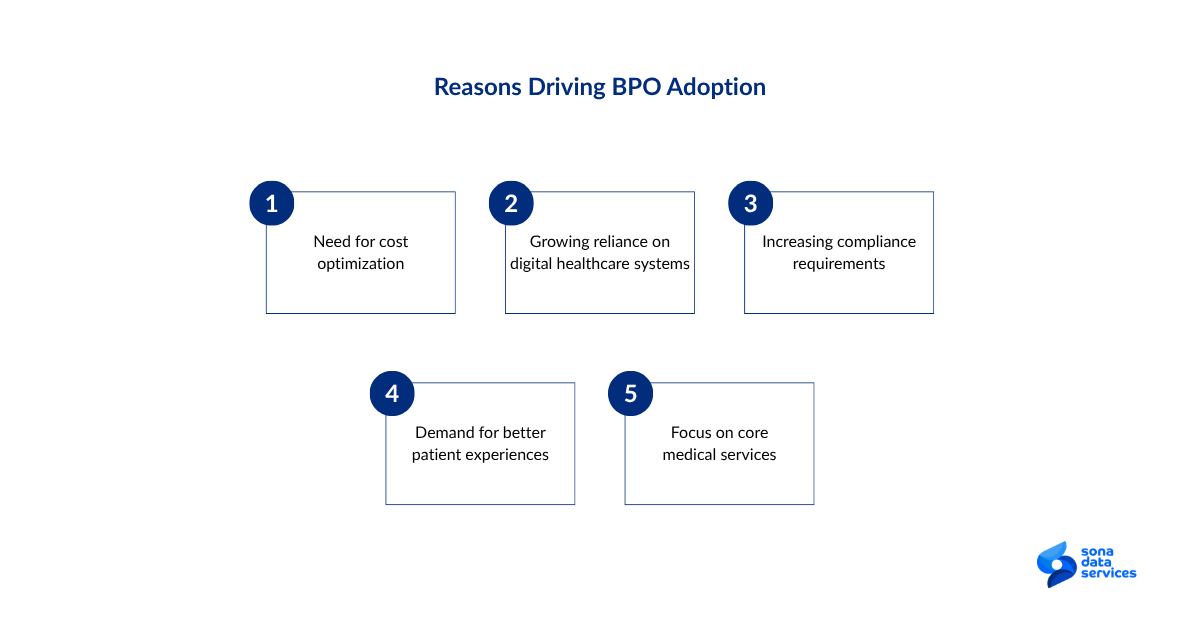
Reasons driving BPO adoption:
- Need for cost optimization
- Growing reliance on digital healthcare systems
- Increasing compliance requirements
- Demand for better patient experiences
- Focus on core medical services
Key benefits of healthcare BPO services
1. Reduced operational costs
Managing in-house teams for administrative functions can be expensive. Outsourcing helps reduce costs associated with hiring, training, salaries, and infrastructure.
Healthcare BPO providers offer flexible pricing models, allowing organizations to scale services based on their needs.
Cost-saving advantages include:
- Lower staffing and operational expenses
- No infrastructure investment required
- Pay-as-you-scale service models
- Reduced training and onboarding costs
2. Improved accuracy and compliance
Errors in medical billing and coding can result in claim denials and financial losses. BPO providers use trained professionals and standardized processes to ensure accuracy and compliance with regulations.
This leads to improved revenue cycle management and fewer disruptions.
Key improvements include:
- Reduced billing and coding errors
- Faster and accurate claims processing
- Better compliance with healthcare regulations
- Lower risk of penalties and audits
3. Enhanced patient experience
Patient satisfaction is a critical factor in healthcare success. Outsourcing patient support services ensures timely communication, faster responses, and efficient appointment handling.
This creates a smoother and more reliable patient journey.
Ways BPO enhances patient experience:
- Quick response to patient queries
- Efficient appointment scheduling
- Improved communication channels
- Better follow-up and engagement
4. Increased operational efficiency
Administrative tasks can slow down healthcare operations and reduce productivity. By outsourcing these tasks, organizations can streamline workflows and improve efficiency.
Medical professionals can focus more on patient care rather than paperwork.
Efficiency gains include:
- Faster processing of administrative tasks
- Reduced workload for in-house staff
- Improved workflow management
- Better allocation of resources
5. Access to skilled professionals
Healthcare BPO providers bring experienced professionals with expertise in billing, coding, and support services. This ensures high-quality outcomes without the need for constant in-house training.
Benefits of expert support:
- Access to trained specialists
- Up-to-date industry knowledge
- Reduced dependency on internal teams
- Consistent service quality
6. Scalability and Flexibility
Healthcare needs can change rapidly due to patient volume or business growth. BPO services offer the flexibility to scale operations accordingly.
This allows healthcare providers to adapt without additional investments.
Scalability benefits include:
- Easy expansion during peak demand
- Flexibility to adjust services as needed
- Support for growing healthcare organizations
- No long-term infrastructure commitments
Signs your organization needs healthcare BPO support services
Identifying the right time to outsource can significantly improve performance. If your organization is facing ongoing operational challenges, it may be time to consider BPO services.
Common signs include:
- Frequent billing and coding errors
- Delays in claims and reimbursements
- High administrative workload for staff
- Poor patient communication and support
- Difficulty managing patient data effectively
These issues not only affect efficiency but can also impact patient satisfaction and revenue.
CTA: Discover the Right BPO Solution for Your Practice
How to choose the right healthcare BPO service provider
Key Factors to Consider
Choosing the right BPO partner is critical for long-term success. A reliable provider should align with your operational goals and maintain high standards of service.
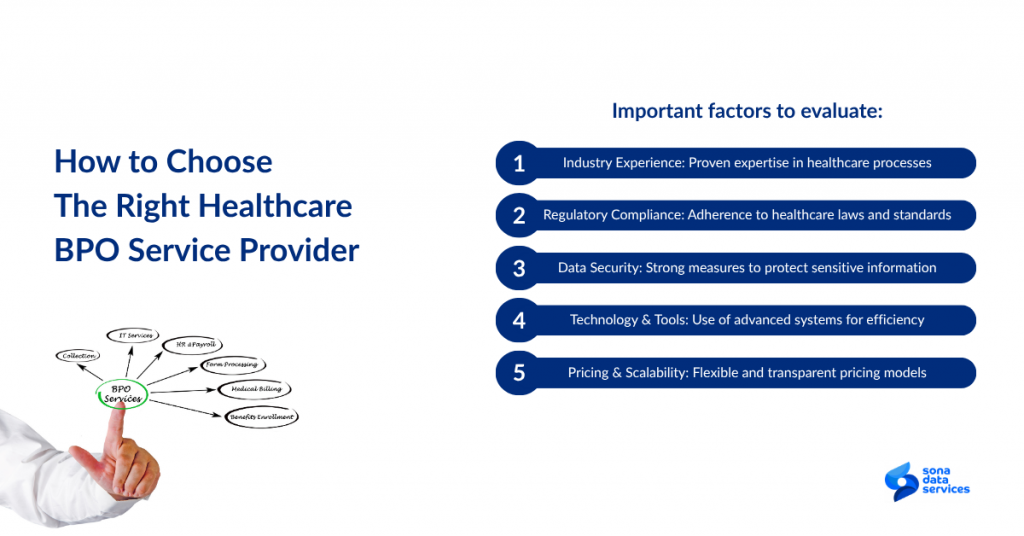
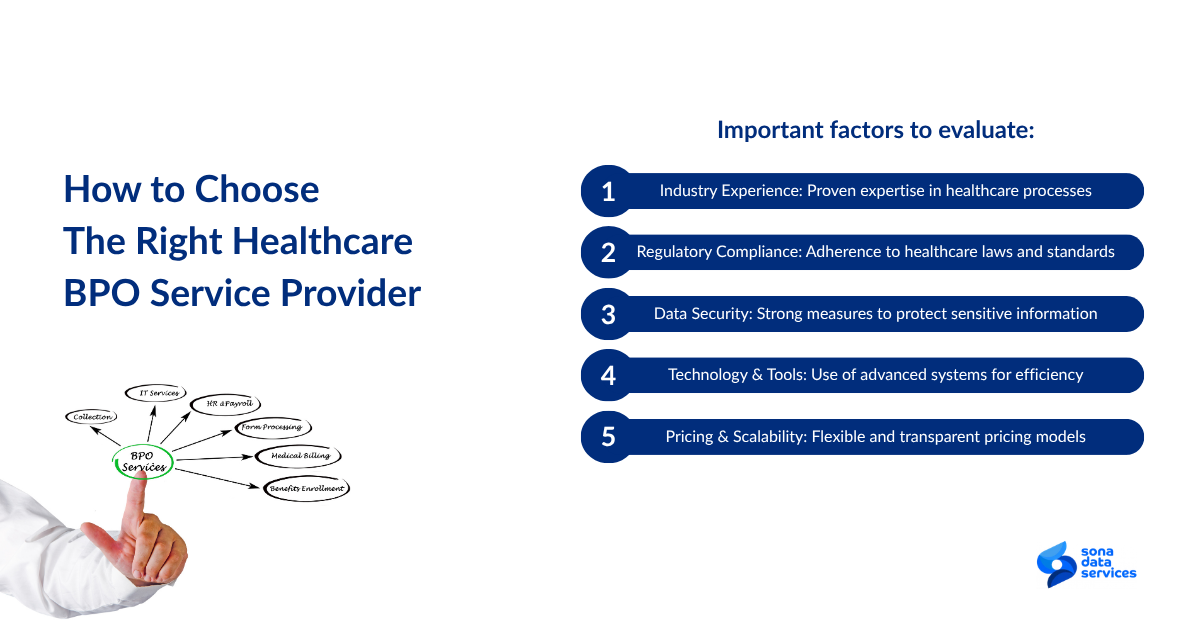
Important factors to evaluate:
- Industry Experience: Proven expertise in healthcare processes
- Regulatory Compliance: Adherence to healthcare laws and standards
- Data Security: Strong measures to protect sensitive information
- Technology & Tools: Use of advanced systems for efficiency
- Pricing & Scalability: Flexible and transparent pricing models
A well-chosen partner can significantly enhance operational performance and reduce risks.
Conclusion: Transform healthcare operations with BPO
Healthcare BPO is no longer just a cost-saving option, it is a strategic solution for improving efficiency, accuracy, and patient experience. By outsourcing non-core functions, healthcare providers can reduce administrative burdens and focus on delivering better care.
From cost reduction to improved compliance and scalability, the benefits of healthcare BPO services are substantial and long-lasting.
In summary, BPO helps healthcare organizations:
- Reduce operational costs
- Improve accuracy and compliance
- Enhance patient experience
- Increase efficiency and productivity
- Scale operations with ease
Adopting BPO services enables healthcare providers to stay competitive and future-ready in a rapidly evolving industry.
Transform Your Healthcare Operations Today!